In today’s digital age, consumers are met with video content at every touchpoint. As streaming continues to redefine how audiences experience video content worldwide, delivering premium quality content is paramount.
High Dynamic Range (HDR) stands at the forefront of this transformation, enabling richer contrasts, brightness, and color range that allow viewers to experience content in a much more immersive way. HDR expands the range between darkness and brightness within an image or video, while Standard Dynamic Range (SDR) limits the contrast ratios, obscuring key details in very dark or bright areas. Providing a more realistic representation of what the human eye naturally perceives, HDR captures depth, clarity, and motions of live movement.
InterDigital’s HDR research began in the early 2000s with Technicolor video engineers pioneering ways to deliver the highest quality video to preserve the artistic intent of movie studios, creatives, and colorists. This heritage of HDR innovation impacts consumers seeking quality video experiences, content creators striving to fulfill their artistic vision, and broadcasters working to ensure seamless delivery across devices and platforms.
InterDigital’s research continues to tackle industry’s most prominent challenges, and our pioneering innovations in advanced and new media codecs, energy-aware streaming, and HDR solutions have consistently delivered impactful benefits. Our work includes scaling the deployment of HDR content over diverse networks and workflows to ensure consistent and premium content delivery. By enabling interoperability between HDR conversions, InterDigital advances innovations that enable the delivery of the best video quality across the value chain, from broadcasters to content creators and audiences alike.
The Need for HDR
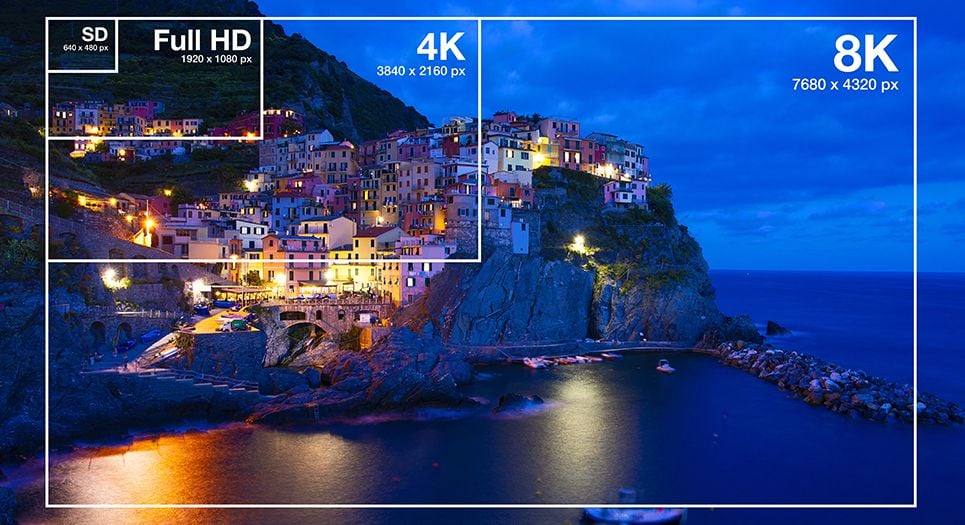
As video resolution has evolved, most 4K content was limited by SDR, which constrained brightness and color and has yet to meet consumer expectations for realism . The introduction of HDR helped bridge the gap, enhancing pixels to be more luminous, color-accurate, and representative of real-world lighting.
In practice, HDR has become essential to preserve creative intent for broadcasters and content creators, making it possible to tell stories with greater freedom and flexibility without sacrificing visual integrity and artistic choices made during production. The challenge, however, lies in consistency across displays. While HDR warrants the capture and representation of a vastly expanded range of luminance and color, HDR playback is highly dependent on the capabilities of the device’s display. Tone mapping mitigates this, either through tone compression which maps from HDR to a lower-luminance HDR or SDR, or tone expansion, mapping from SDR or HDR to a higher luminance HDR.
Ensuring reliable HDR conversions throughout production and delivery increasingly relies on metadata-driven interoperability. Metadata provides contextual information like luminance levels, reference points, and conversion parameters that allow each system in the delivery chain to interpret and reproduce HDR content accurately.
Despite its transformative potential, HDR also brings technical and operational complexities in video production and distribution, resulting from differing formats, varying device capabilities, and the continued relevance of existing SDR ecosystems.
How InterDigital Innovation Tackles Today’s Challenges
InterDigital’s award-winning research and media solutions have long addressed key industry challenges. An emerging barrier to providing live HDR is achieving real-time interoperability, or preserving the correct conversion as signals move through the video chain. Each conversion stage must ensure that both diverse HDR and SDR audiences experience the same high-quality and accurate representation of the original scene. Inconsistencies emerge when conversions are not handled precisely, which are then magnified in live environments where multiple feeds, lighting conditions, and devices interact in real time, leading to instability throughout the entire delivery chain. This affects not only visual quality but the overall viewing experience for audiences worldwide.
InterDigital recently showcased state-of-the-art video workflows and innovative approaches to enable seamless HDR and SDR conversions at the 2025 SMPTE Media Technology Summit, where engineers introduced Dynamic Range Conversion Characterization Metadata, or a set of metadata to characterize conversion curves for interoperability between technologies. These control points define how brightness and color are mapped between HDR and SDR formats, ensuring creative fidelity and technical accuracy across the entire workflow.
InterDigital develops novel dynamic tone-mapping (DTM) approaches as a way to address these limitations. DTM emerges from decades of research in HDR imaging and processing, which analyzes the content in real time and automatically adapts the conversion parameters. While DTM approaches offer greater flexibility, they must be refined to achieve a consistent visual output that preserves perceptual integrity. To resolve this, InterDigital applies a metadata-based interoperability framework that defines a shared set of control points allowing both static and dynamic solutions to be interoperable, ensuring consistency across devices and displays.
InterDigital’s DTM contributions for live HDR workflows offer a foundation to better resolve the overarching challenges associated with HDR content spread. Based on foundational tools using machine learning models, the future integration of AI-driven solutions will strengthen our research and allow complex ecosystems to support live interoperability requirements to meet the business and performance needs of all industry stakeholders.
As interest in HDR content continues to accelerate, industry must depend on reliable media services and solutions to meet demand and achieve desired content results. At InterDigital, we remain committed to empowering broadcasters and content creators to deliver premium content at the highest quality, leading to an elevated viewing experience that brings consumers together.