Ensuring Quality of Experience (QoE) in Extended Reality
With advances in immersive codecs and hardware, XR is now poised to become a staple of immersive entertainment and communication.
At InterDigital, we enable XR in two ways: our Media System and New Media Codec research contributes to the standards that make XR technology possible, while our QoE work focuses on optimizing the experience for the end user so that the technology is truly experiential, multi-sensory, and engaging.
The XR Technologies We Research
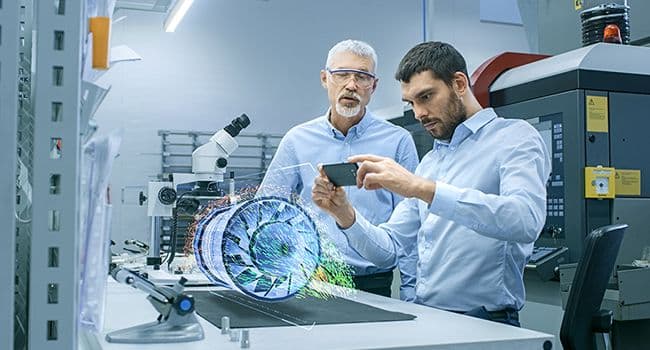
Augmented and Mixed Reality (AR/MR)
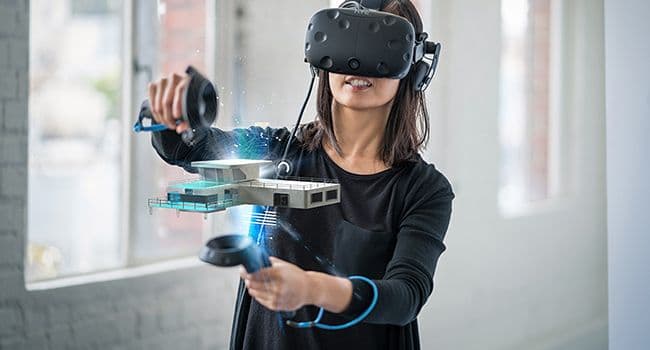
Virtual Reality (VR)
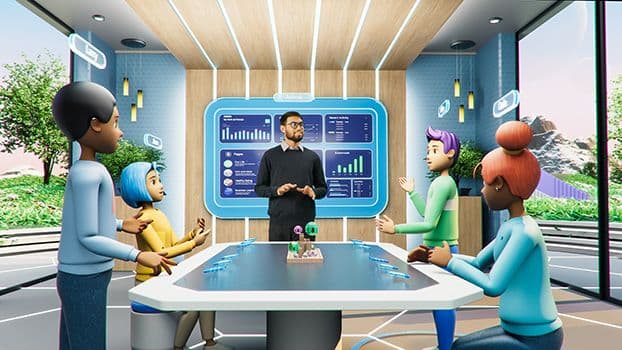
Avatars
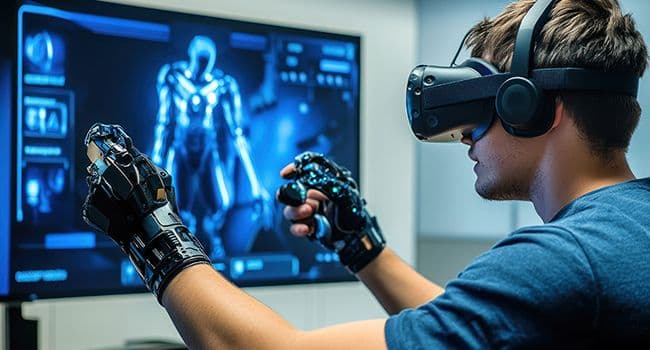
Haptics
The XR Use Cases We Power

Smartglasses
AR-powered smart glasses enhance vision with real-time translation, facial recognition, and object identification. InterDigital contributes to AR standards that help these overlays appear stable while running efficiently inside a lightweight, power-constrained device.

Virtual Retail
AR-powered visualization helps customers see how products will fit in their environment—like previewing how a couch looks in a living room—while VR-based experiences allow users to explore fully realized 3D virtual stores. Our research helps deliver high-fidelity visuals and low latency for these remote retail experiences.

AR and VR Gaming
We research improvements to the immersive standards that govern AR and VR and help standardize technology that allows XR-based games to run at the higher frame rates and with the minimal lag they require for practical use in casual and competitive applications.

Motion Sickness-Free VR Experiences
Motion sickness has historically barred many users from experiencing VR, limiting potential for adoption and commercialization. By studying motion-to-photon latency and multimodal synchronization, we are helping address this challenge for a more comfortable, accessible experience.

Holographic Models
MR-based holograms enable new forms of design, prototyping, training, and healthcare—from visualizing a new product in 3D to overlaying patient scans during surgery. InterDigital advances volumetric video standards like V-PCC and MIV, which compress and deliver holographic content efficiently enough for real-time use.

Haptic-Enhanced Video
Still an emerging field, haptic media syncs vibrations, pulses, and feedback from the viewing device with on-screen visuals. Some haptic trailers have already hit the market. Our research helps advance the encoding methods that will bring this technology from short demos to full-length film and television.
InterDigital Honored with Produit en Bretagne Award: A Testament to Regional Leadership and Impact
READ MORE

Where We Are Leading
InterDigital contributes to multiple standards bodies that support XR advancement, most directly with MPEG, where we contribute to scene description, as well as immersive, volumetric, and haptic-based codecs that power XR experiences. Our work with MPEG, 3GPP, IETF, and ETSI advances next-generation codecs, XR-aware networks, and QoE frameworks critical to future XR applications.







BLOG POST
How InterDigital is Leading the Path to 6G

BLOG POST
InterDigital Honored with Produit en Bretagne Award: A Tes...
BLOG POST
Touching the Future: Revealing the Magic of Haptics
Touch is the next digital frontier. Explore the future of haptics from today’s XR to new opportunities for haptographers...

BLOG POST
Bridging Consistency and Creativity: How InterDigital’s HDR...

BLOG POST
InterDigital’s Insights for 2026

BLOG POST
2025: InterDigital’s Year In Review
Widespread, accessible extended reality will represent a significant leap forward in consumer and enterprise technology. InterDigital researchers and innovators are working to bring that future closer and deliver immersive and interactive experiences in entertainment, business, real-time communication, and daily life.
Questions About Our XR Research?
Get in touch with our team